
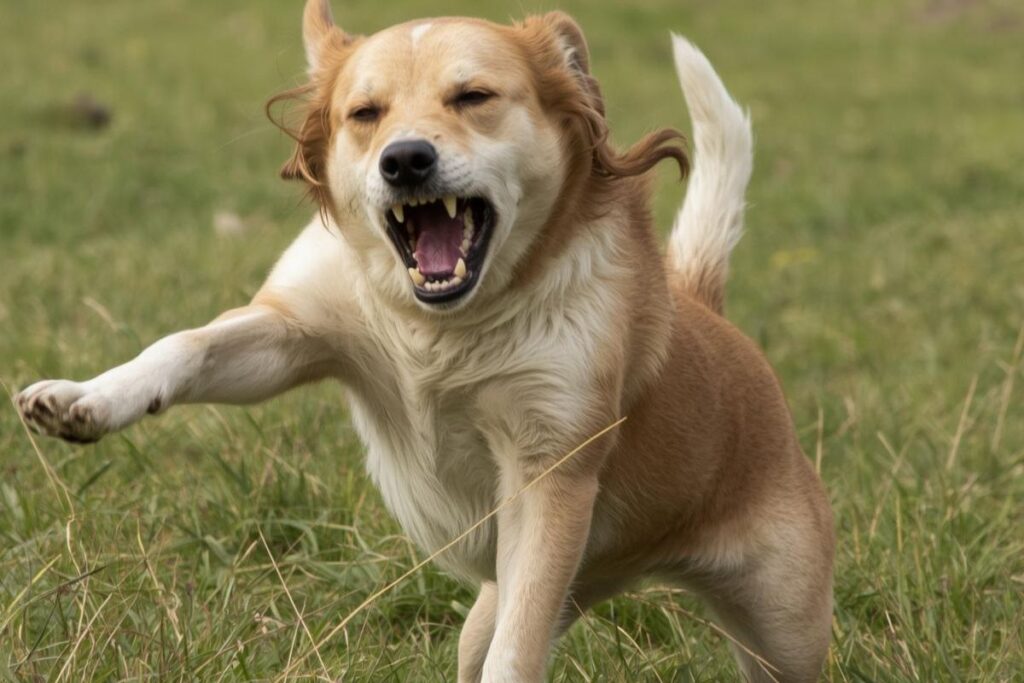
If you’ve ever watched dogs wrestle, mouth each other, growl, or chase, you’ve probably asked yourself:
“Is this normal… or should I stop it?”
You’re not the only one. A lot of dog owners inquire, “Is my dog playing with me or being aggressive?” This is especially true when the dog is a puppy, because puppy play can look fierce and terrifying.
The good news is? A lot of what looks like “rough” behavior is actually healthy, social play. The hard aspect is figuring out when play turns into hostility and when you need to step in.
There are over 4.5 million dog bites in the US every year, and about 800,000 of them need medical attention. Knowing how to detect if your dog is being aggressive or just playing is important for everyone’s safety. Let’s break it down in a way that makes sense, is useful, and is based on how dogs really act.
Understanding Why Dogs Play Rough
Dogs don’t play the same way people do. They don’t gracefully throw a ball back and forth or announce “time out.” Instead, dogs play by pretending to fight each other by biting, chasing, tackling, and wrestling. Playing with puppies provides several important developmental purposes:
Establishing pack hierarchy: Dogs naturally try to figure out the social order, even in your house. They play fight to see who is in charge and who follows.
Developing survival skills: In the wild, those wrestling and biting skills would be essential for hunting and self-defense. Play-fighting allows dogs to practice these movements safely.
Learning bite inhibition: Puppies learn how hard is too hard through play. When they bite too hard, their friend yelps, and the game pauses. That’s strong feedback!
Building social bonds: Playing with other dogs on a regular basis helps them make friends and learn how to talk to each other and set limits.
Burning energy: Rough play is especially good for high-energy breeds because it is so physically demanding.
This is very normal behavior. The most important thing is knowing when to stop.
Signs Your Dog Is Playing (Not Fighting)
Here’s what friendly puppy playing looks like:
The Classic Play Bow
This is the first lesson in how to talk to dogs. Your dog puts their front end down and lifts its back end, wagging their tail. This worldwide “let’s play!” signal tells other dogs (and you) that everything that happens next is all for fun.
Gentle Mouthing and Biting
Do dogs bite when they play? Absolutely! But there’s a difference. During play:
- Mouths are open and relaxed
- Biting is gentle with no pressure
- Focus is on limbs rather than the neck or face
- Dogs release quickly and frequently
That’s how dogs interact with each other! They’re treating you like a playmate.
Role Reversal and Taking Turns
Watch closely – are both dogs getting a chance to “win”? Healthy play involves:
- Trading off who chases whom
- Both dogs are taking dominant and submissive positions
- Each allows the other to escape and retreat
Bouncy, Loose Body Language
Playful dogs look:
- Energetic and bouncy
- Relaxed with loose, wiggly movements
- Happy with soft, relaxed facial expressions
- Engaged but not fixated
Playful Vocalizations
Growling during play happens, but it’s different:
- Higher-pitched than aggressive growls
- Brief and intermittent
- Accompanied by loose body language
- Mixed with barks and playful sounds
Voluntary Submission
When a dog rolls over to show its belly while playing, it means it’s being friendly and not menacing. This voluntary submission indicates, “I’m not a threat; we’re just having fun!”
Warning Signs of Aggression
Stiff, Tense Posture
Aggressive dogs appear:
- Rigid with tense muscles
- Standing in a stiff-legged stance
- Frozen or moving mechanically
- Showing facial tension (furrowed brow, tight lips)
Hard Staring and Intense Focus
An aggressive dog will:
- Lock eyes without blinking
- Engage in excessive stalking behavior
- Show laser-focus on their target
- Ignore everything else around them
Serious Growling and Snarling
Unlike play growls, aggressive vocalizations are:
- Deep, low-pitched, and rumbling
- Continuous rather than brief
- Accompanied by lip curling to expose teeth
- Mixed with snapping or lunging
Bullying Behavior
Watch for:
- One dog is constantly dominating without switching roles
- No “escape” opportunities for the other dog
- Persistent chasing without breaks
- Mounting or pinning that doesn’t stop
Harsh, Forceful Biting
Aggressive biting involves:
- Breaking skin or causing injury
- Targeting the neck, face, or head
- Prolonged gripping without release
- Increasing intensity rather than backing off
Ignoring “Stop” Signals
A playful dog responds immediately when their playmate:
- Yelps in pain
- Tries to retreat
- Shows submission signals
- Signals discomfort
An aggressive dog ignores these cues entirely.
The Play vs. Aggression Comparison
| Playful Behavior | Aggressive Behavior |
| Play bow invitation | Stiff, rigid posture |
| Open mouth, gentle mouthing | Bared teeth, wrinkled muzzle |
| Soft, brief grabbing | Hard biting that breaks skin |
| High-pitched, playful barking | Low, threatening growling |
| Loose, bouncy movements | Tense, mechanical movements |
| Taking turns chasing | Constant domination, no role reversal |
| Responding to yelps/stops | Ignoring distress signals |
| Exposing the belly voluntarily | Mounting, pinning aggressively |
| Brief pauses in action | Relentless, escalating intensity |
| Tail wagging and relaxed | Tail rigid, ears back |
Why Play Sometimes Turns Into Aggression
Even friendly dogs can cross the line under certain conditions.
Common Triggers
- Overstimulation or exhaustion
- Fear or anxiety
- Pain or injury
- Poor early socialization
- Resource guarding (toys, food, people)
- Hormonal changes (especially in intact dogs)
According to data from the United States, 4.5 million dog bites occur every year. Most of them happen at home with dogs that are already known to the victim, not with strangers. That’s why it’s important to know the early warning signals.
When You Should Step In
You don’t need to stop every growl or wrestle—but you do need to intervene when:
- One dog looks scared or trapped
- Play stops being mutual
- The intensity keeps escalating
- A puppy keeps biting without backing off
Redirect calmly. If you need to, keep the dogs apart. Don’t yell or chastise; these things make tension worse and can make aggression worse.
How to Prevent Aggression During Play
Prevention is always easier than correction.
Smart Prevention Tips
- Socialize puppies early with well-mannered dogs
- Use positive reinforcement, not punishment
- Give dogs enough exercise and mental stimulation
- Supervise new playmates closely
- Teach basic cues like “leave it” and “settle.”
Dogs that feel safe, fulfilled, and understood are far less likely to develop aggression.
Breed Myths: Are Some Dogs Just Aggressive?
There are inclinations based on breed, but they don’t control behavior.
Research indicates that environment, training, and socialization are significantly more influential than breed alone. Interestingly, smaller dogs are more aggressive toward their owners than wider, larger varieties.
The takeaway? Judge the dog in front of you—not the stereotype.
Special Considerations for Different Life Stages
Puppies (8 weeks – 6 months)
Puppy playing is extra important for development, but requires supervision:
- Mouthy behavior is normal, but it needs boundaries
- Teach bite inhibition through “ouch!” and stopping play
- Provide appropriate chew toys
- Never allow rough play with humans’ hands or feet
Adolescents (6 months – 2 years)
This challenging phase brings:
- Increased energy and testing boundaries
- Hormonal changes affecting behavior
- Need for continued socialization
- Importance of consistent training
Adult Dogs
Maintain good behavior through:
- Regular exercise and mental stimulation
- Ongoing training and reinforcement
- Monitoring play for any changes
- Addressing new aggressive behaviors promptly
Senior Dogs
Older dogs may show increased irritability due to:
- Pain from arthritis or health issues
- Cognitive decline
- Decreased tolerance for rough play
- Need for gentler interactions
Keep Play Safe & Give Your Dog the Best Care at Woof Gang Bakery & Grooming Las Vegas
We think that dogs that are happy are dogs that are well-socialized and well-cared for at Woof Gang Bakery & Grooming Las Vegas. Knowing these signals can help keep your dog and other people safe, whether you’re playing with them at home or taking them to the groomer.
Make an appointment for grooming at one of our places in Skye Canyon or Durango. We are delighted to offer discounts to military, police, and fire/rescue personnel, as well as regular buyer programs on pet food, fair prices every day, and freshly baked treats. We can’t wait to see you and your furry friend!
FAQs
Q: How to tell if your dog is aggressive or playing?
A: When dogs are playful, they move in a loose, bouncy way, bow down to play, mouth gently, and switch roles. Aggressive dogs stand up straight, stare hard, growl seriously with their teeth bared, constantly try to dominate, and bite hard without stopping when the other dog shows pain.
Q: Why does my dog play bite me?
A: Because dogs naturally play-bite! Dogs talk to each other using their mouths, and they see you as a playmate. When dogs play, they wrestle by mouthing, grabbing, and lightly biting. The most important thing is that play biting should be soft, not hurtful, and focused on the dog’s limbs instead of its face or neck. The dog should let go swiftly and respond when you cry “ouch!”
Q: Are certain breeds more prone to aggressive play?
A: Studies reveal that certain breeds are more likely to be aggressive (29.3% of Akitas are aggressive with other dogs, and 22% of pit bulls are aggressive with other dogs), although temperament, socialization, training, and environment are more important than breed. Greyhounds are always at the bottom of the list for aggression. However, even breeds that are normally gentle can become violent if they aren’t socialized properly. On the other hand, “aggressive” breeds can be very gentle if they are trained properly. Instead of relying on breed preconceptions, think about what your dog needs.
Q: What does puppy playing look like?
A: When puppies play, they bounce around a lot, bow to each other, wrestle gently, take turns chasing each other, mouth and bite softly, bark in high-pitched tones, and stop a lot. When play gets too violent, puppies will roll over on their backs and show their bellies right away. Role reversal is a part of healthy puppy play. In this game, both puppies get to be “dominant” and “submissive,” and they may both back off when they need to.